Messenger

Chat Zalo

Phone
"Promoting learning personnel" is a problem that makes many managers worried. Sometimes, our efforts inadvertently create a reflective force, making them look for ways to step back.
In fact, behind the clever rejections or superficial nods is an "iceberg" of psychological barriers. The biggest mistake a leader makes is trying to "pour" knowledge into a closed jar. Instead of being forced, make learning a privilege – where each employee finds their own way to conquer new ladders.
This article will help you decipher the roadmap to change the training mindset:
Breaking the iceberg: Properly understand the invisible fears that are suppressing team motivation.
Apply techniques that stimulate the need to learn and turn daily work into a real training environment.
Tips for managers in human resource management.
1. Why are HR "afraid" to learn?
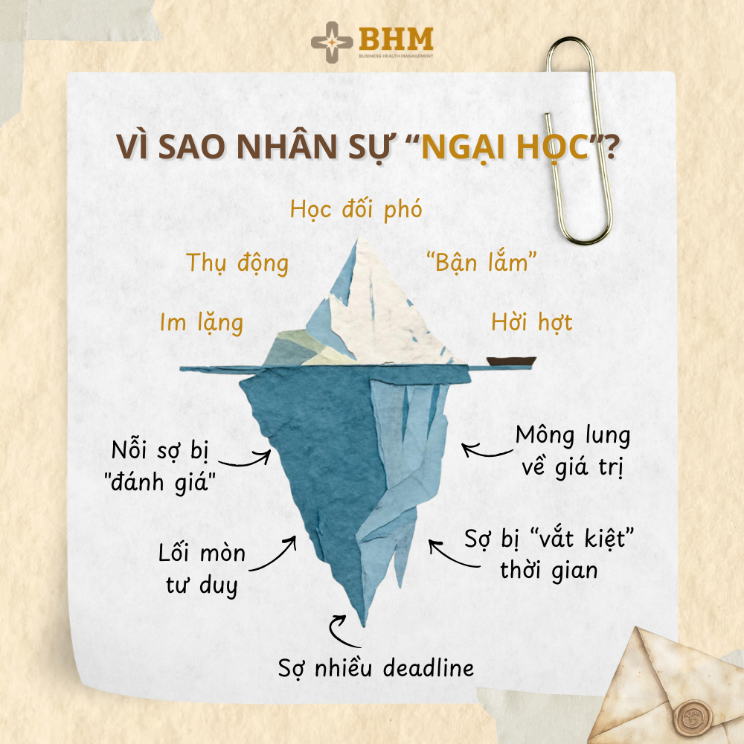
Most managers complain about passive employees, but few ask themselves, "Why are they so afraid of learning?" In fact, the barrier does not lie in laziness, but in 3 bottlenecks:
Fear of being "judged": Learning something new means admitting that you are "weak" or "lacking".
Thinking path: After a period of work, employees are easy to fall into the comfort zone. They are afraid to change because they are afraid that new knowledge will disrupt old processes that are working "well".
Worries about "squeezing out" time: With the current volume of KPIs, learning inadvertently becomes the "2nd deadline". Employees feel that learning is working overtime, not developing.
Value confusion: They don't see the connection between empty theory and salary increases or promotions. "Finish studying and leave it there" is the biggest reason to suppress motivation.
2. Methods of "Activating" the initiative
In order for employees to be voluntarily engaged, managers need a support ecosystem instead of commands:
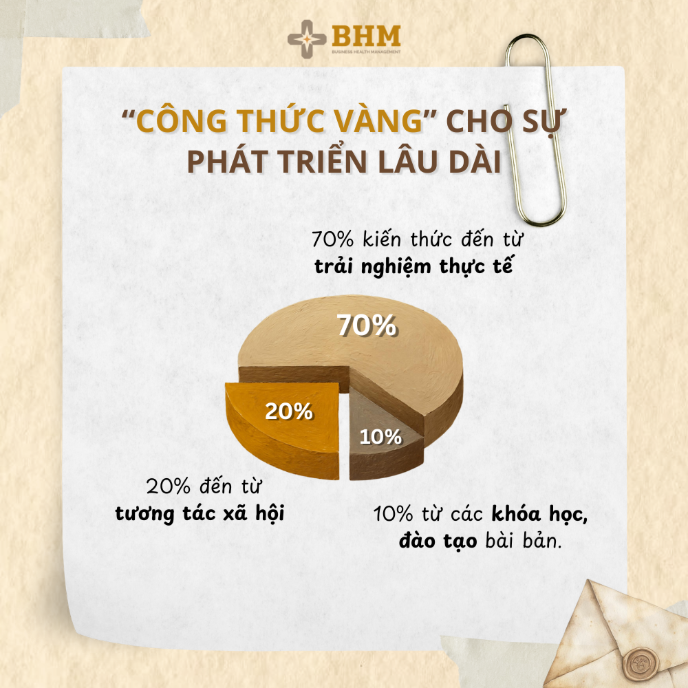
Apply the 70:20:10 (Lombardo & Eichinger) Model: Don't just send them to draft, course. Remember:
70% of the knowledge comes from practical experience (Challenge them with a new project).
20% comes from social interaction (Learning from peers, Mentor).
The new 10% is from methodical courses/training.
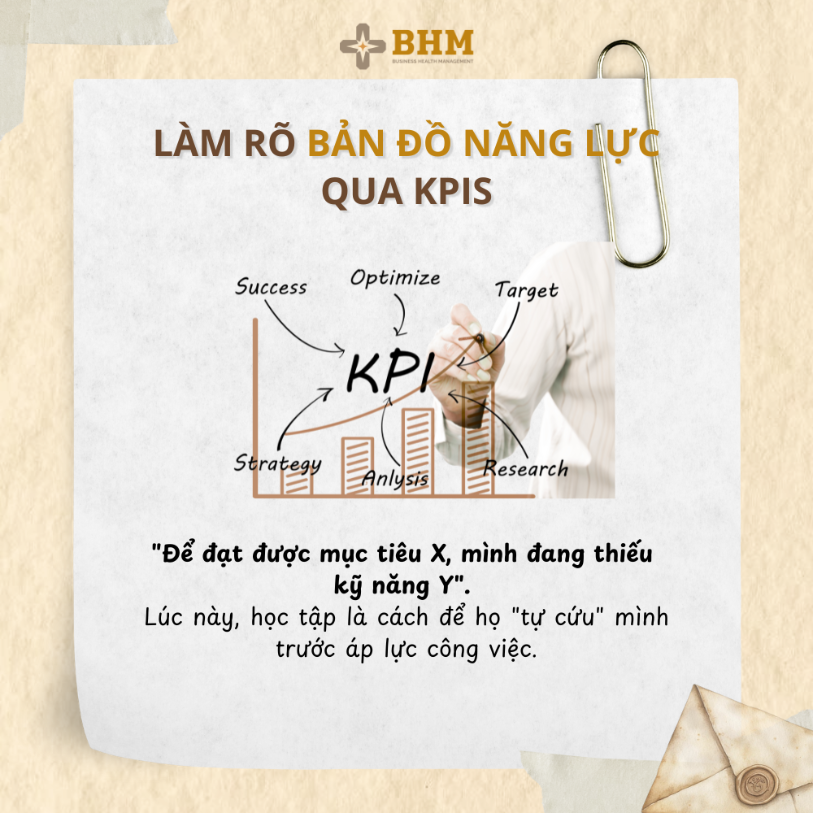
Clarify the "Competency Map" through KPIs: When the KPIs and job description are clearly standardized, employees will realize themselves: "To achieve goal X, I am lacking Y skills". At this time, learning is a way for them to "save" themselves under work pressure.

Create a "Playground" to share knowledge: Organize learning sessions and sharing. When employees are in the role of sharers, they will be responsible for deepening their knowledge many times more than just sitting and listening.
3. Advice for managers: Don't just be a "Leader", be a coach
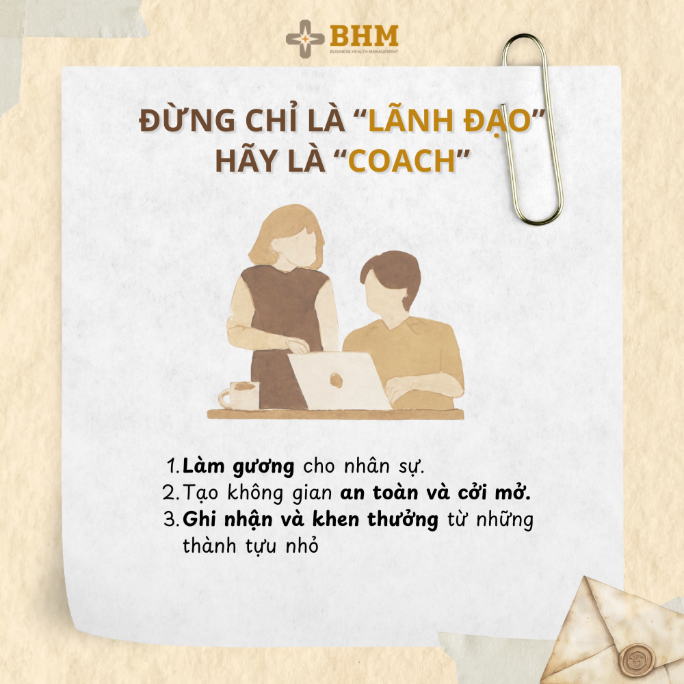
In order for the learning culture to really take root, managers need to change their mindset:
Set an example: Employees will not learn if they see that their boss has stopped updating their knowledge. Share a book you're reading or a skill you've just learned.
Create a safe and open space: Instead of criticizing employees when they make mistakes, ask, "What did we learn from this failure?" Make your company a safe place for trial and error.
Timely recognition: Sometimes, a compliment in front of the team for an individual's progress is more valuable than any certification.
REGISTER
RELATED NEWS
![[BHM x EPU] – “From Pure Curiosity to Effective Communication”](/storage/96/gl/96gllitpeyp7kv5gkvquwy35m53k_1.png)
[BHM x EPU] – “From Pure Curiosity to Effective Communication”
At BHM, we always prioritize the holistic development of talent, contributing to the supply of potential human resources for the labor market. In today's modern environment, pure curiosity is not only the key to helping students expand their learning opportunities and advance in their future careers, but also a "treasure" for deep connection, collaboration, and leadership.

Vietnamese Enterprises 2026 - Restructuring & Upgrading Core Competencies
Vietnamese Enterprises 2026 - Restructuring & Upgrading Core Competencies From the "Vietnam Domestic Market Report 2025" of Industry and Trade Publishing House, we draw a clear orientation for Vietnamese businesses in 2026: "Growth no longer comes from rapid expansion, but from platform quality and restructuring capacity."
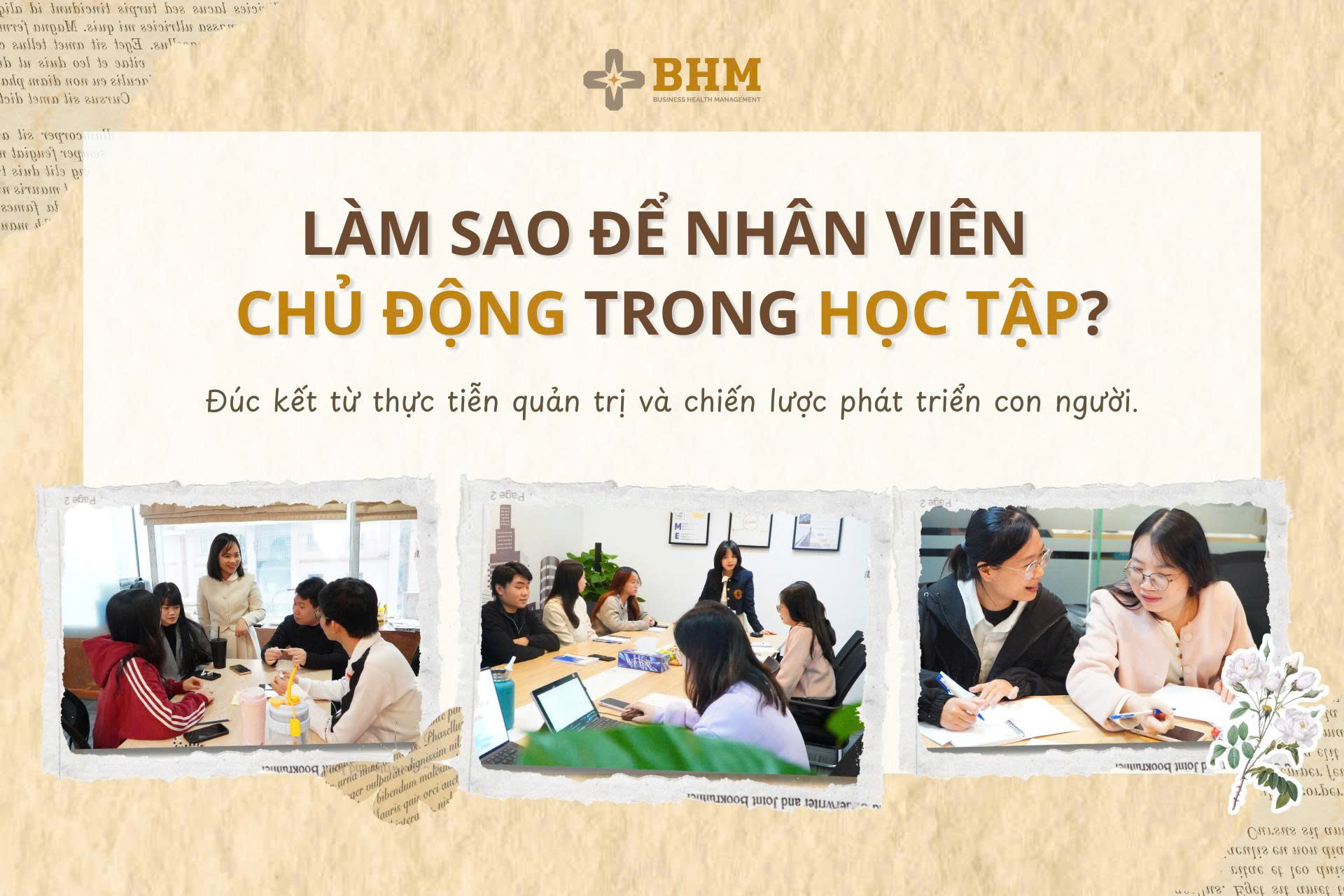
How can employees actively learn without coercion?
"Promoting learning personnel" is a problem that makes many managers worried. Sometimes, our efforts inadvertently create a reflective force, making them look for ways to step back. In fact, behind the clever rejections or superficial nods is an "iceberg" of psychological barriers. The biggest mistake a leader makes is trying to "pour" knowledge into a closed jar. Instead of being forced, make learning a privilege – where each employee finds their own way to conquer new ladders. This article will help you decipher the roadmap to change the tra
ABOUT US
BHM BHM Consulting BHM Auditing & Valuation BHM Wealth Management BHM Academy Gallery News PolicyCONNECT WITH US



 Tiếng Việt
.png)